Author: Sarah Ignatius

  • Living Forever

    Living Forever

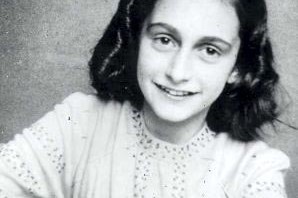
    Anne Frank smiling

    “Be sure to go to the Anne Frank House.” That was one of my writing partners when I told her I was heading to Amsterdam.  “Also, look for the bench where Hazel and Augustus sat by the canal in The Fault in Our Stars,” she added. Since she’d missed the Van Gogh Museum when jet lag left her sleeping through her timed entry, she limited her recommendations to those two.

    As much as I loved The Fault in Our Stars, I wasn’t sure about finding the bench. There must be hundreds, thousands of benches by canals in Amsterdam. I couldn’t stroll around forever. And the Anne Frank House? Wasn’t that in Germany? Maybe Amsterdam had some kind of museum but not the actual hiding place. I googled it and, sure enough, Anne Frank had hid in Amsterdam. How did I not know that? I’d read her diary as a kid and again as an adult and never placed the location.

    I went online for tickets and the only entry time left was the morning I would arrive in Amsterdam after flying all night from Boston and changing planes. Everything had to work perfectly: Both flights had to be on time, international customs had to be a zillion times faster than it is in Boston, and I couldn’t get lost going from the airport into the city and walking to the museum. Never mind I’d never been to Amsterdam before.

    Despite a middle seat in a row of five across, I slept several hours on the plane. Flights and customs were a breeze, signage at Schipol International Airport to the train was easy—no Dutch required—and a helpful conductor motioned all of us going into Amsterdam onto a waiting train. Thirty minutes later I arrived downtown, checked my carry-on in a locker at the train station and headed toward the Anne Frank House about a mile away, feeling quite self-satisfied and full of energy from a perfect cappuccino at the airport.

    I arrived with nearly an hour to spare and no, they don’t let you go in before your allotted time. It was hard to slow down. I walked through the Cheese Museum (smelly), West Church (grand Renaissance church where Rembrandt was buried in 1669) and the Tulip Museum (kind of pointless) before returning to the Anne Frank House and trying to absorb its presence. It looks like any building in Amsterdam, a flat-fronted, brick, four-story row house along a cobblestone walkway next to a canal.

    I stared at the exterior trying to imagine what people felt in the 1940s, passing this unremarkable building after the Nazis invaded The Netherlands, or what Anne and her family and the Van Pels family and the dentist Fritz Pfeffer felt hiding inside for over two years.

    People now sit at open air cafes on nearby corners, drinking Amstel Light or espresso, and enjoy the sun and each other’s company even on a raw windy day. That Anne Frank’s actual hiding place was here is such a contrast to the current scene surrounding it that it seemed unreal, like a movie set.

    Long lines of people were waiting to enter: teenagers, older couples and everyone in between, wearing jeans and t-shirts, slacks and dresses; people of light and dark complexions, speaking a variety of languages.

    Once inside, I viewed a short video showing scenes from that grim time in history that forced Anne and her family into hiding to avoid the Nazi death camps. From there, I passed beside the hinged bookcase, now left ajar, that hid the doorway to the annex, and entered Anne Frank’s world. I followed the stream of visitors, reading quotes from Anne’s diary written on the walls.

    “I finally realized that I must do my schoolwork to keep from being ignorant, to get on in life, to become a journalist, because that’s what I want!”

    “But, and that’s a big question, will I ever be able to write something great, will I ever become a journalist or a writer?”

    I ended up in her room, hardly realizing it at first since it is dimly lit to protect the magazine pictures she had put up on the walls. I passed through the other rooms and up the stairway, as steep as a ladder, to the attic.

    The actual diary itself, sits under glass in low light, in the middle of the room.

    Writing in a diary is a really strange experience for someone like me. Not only because I’ve never written anything before, but also because it seems to me that later on neither I nor anyone else will be interested in the musings of a thirteen-year old school girl.”

    Someone, no one knows who, informed on the people in the annex, and Dutch police, led by an SS squad leader, arrested all eight of them in 1944. They were deported to the death camp at Auschwitz. Anne and her sister Margot died of typhus in Bergen-Belsen, probably only a few months before the war ended in 1945. Anne was 15. Her father, Otto Frank, was the only one of the eight to survive. He devoted the rest of his life to bringing her words to us.

    “I want to be useful or bring enjoyment to all people, even those I’ve never met. I want to go on living even after my death!”

    The museum shows how their survival depended on Otto Frank’s four employees, who were not Jewish and who hid them and kept them alive for over two years. Miep Gies and her husband found food every day for the eight in the Secret Annex and another Jew they were sheltering in their own home and themselves—eleven people at a time of coupon rationing, running the risk of death themselves. They kept the people in the Secret Annex alive long enough for Anne to write her diary chronicling all that happened. It was Miep Gies, who found Anne’s diary and papers after Anne was arrested and gave them to Otto Frank when he was released from Auschwitz.

    Once outside, reflecting on the experience, I was certain I had heard Anne’s voice, speaking aloud when I was inside. And even though I was sad and angry, I was also happy. She had a huge ambition in life and she realized it in her short time here. And the humanity and courage of the helpers doing the right thing inspired me as much as Anne and her father.

    I never ended up looking for Hazel and Augustus’ bench. I was actually in Amsterdam for the opening of an opera about Machiavelli, for which my older brother wrote the libretto, and the opera was stupendous. But the Anne Frank House was the beating heart of the trip. If Anne could see the millions of us now, waiting in line to read her words, walking through her hiding place, and glimpsing what befell the people there, she would know how much she gave all of us, for which we are forever grateful.
  • Awakening Humanity

    Awakening Humanity

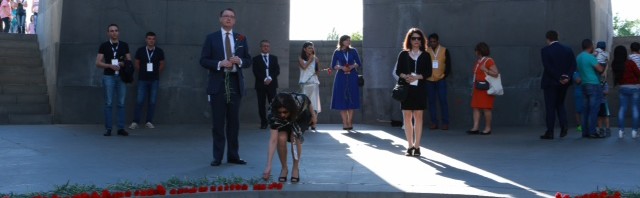
    people placing flowers at the Armenian Genocide memorial

    At the Genocide Memorial in Armenia, I knelt and placed my red carnation at the edge of the eternal flame and stood silently with throngs of people who had come from all over the world at the end of May for the Aurora Prize award.

    Its full name is the Aurora Prize for Awakening Humanity, and it will be awarded for eight years, from 2015 to 2023, in commemoration of the eight years of the Armenian Genocide in the Ottoman Empire 100 years ago, spanning 1915 to 1923, when 1.5 million Armenians were killed. The prize is given in gratitude for acts of humanity that helped to save Armenians and now recognizes heroes saving lives today in dangerous circumstances around the world. We had come to the Genocide Memorial to pay our respects and would soon head to the award ceremony, where my brother David would be master of ceremonies.

    After placing my flower, I stood next to a friend with our backs to one of the huge basalt slabs of the Genocide Memorial, which lean inward in a circle around the eternal flame. I watched other people lay down their red and white carnations, cross themselves, and stand, lost in thought or prayer.

    I thought about my father’s cousins, aunts, and uncles who were caught up in the genocide. One of my father’s uncles, a businessman, was imprisoned and disappeared with nearly all the men in their town. One of my father’s aunts perished with her little daughter on the death march that followed the disappearance and murder of all those men. One of my father’s teenaged cousins was taken for the Labor Battalion to build roads for the Ottoman Army where unarmed Armenian men worked as slave laborers in places so remote they either died of exposure or starvation or were murdered outright. Another teenaged cousin survived for weeks on the forced march across the desert only to disappear when they neared Ras al Ayn, a notorious death camp for Armenians in Syria. I said the names of all those relatives in my head.

    And I said the names of relatives who survived. One cousin of my father’s was a little boy, barely alive, left with nomadic people in the desert to care for him and raise him, probably without ever knowing he was Armenian. Two other boy cousins were kept in a Turkish household while their mother was forced to march across the desert to Aleppo, where the U.S. Consul found the women nearly naked, their skin burned “to the color of a green olive.” She was able to reunite with her sons and come live with them in the U.S., rarely smiling in photos and nearly always wearing black, baggy dresses. Another one of my father’s cousins I met at a family gathering in southern California. A great aunt pointed him out to me, saying only, “He’s an orphan.” I nodded, not fully understanding what she was telling me. She added, “He married an orphan.” I thought it was sad for orphans to marry each other, not realizing she was telling me they were genocide survivors.

    I said their names too at the Genocide Memorial.

    I had come here once before, in 2006. That time, I felt the spirits of my relatives moving in waves through the basalt slabs, as if they were there, finally finding a final resting place where they could be honored, cherished, and mourned. This time I didn’t feel anything occupying the rock walls towering over me. The walls didn’t even look impressive. They looked squat and insignificant.

    It was only later, looking at the Aurora photographer’s photos, which included the moment I placed my carnation beside the eternal flame, that I realized those slabs were as immense as I had thought the first time in 2006.

    But this time, all I felt was loss, and maybe a sense of confusion, as if my ancestors and everyone else’s were saying, “We don’t want your tears or your flowers, we want our lives back.”

    people placing flowers at the Armenian Genocide memorial

    The Aurora Prize this year was awarded a few hours later in a spectacular ceremony to Dr. Tom Catena, the only doctor permanently working in the Nuba Mountains of southern Sudan, treating 500 patients each day while warplanes bomb the region in a deadly civil war. The award was justly deserved and aptly named, to awaken humanity before it is too late.

  • Spring Break is Not Just for Kids

    Spring Break is Not Just for Kids

    two kids, with one dumping a pail of tennis balls on the other

    “Maybe the next time I see you, you’ll play better.”

    That was Alexandrina, my tennis instructor, at the end of my third day of adult tennis camp in Florida last week. Blond, strong, charming really, in her 20s, and originally from Bulgaria, she had patiently been hitting balls to me in the exact right spot for me to blast top-spin forehands and backhands back at her in the hot sun. I had really wanted to come to tennis camp and work on my game, but I hadn’t exactly been blasting anything. “You just need to learn the basics,” she added.

    She didn’t need to say that. I’ve been playing tennis since I was eleven when my mother was the one on the other side of the net arcing balls over to me at the public courts near our house in Washington, D.C. I went on to compete as a junior and even played on the Stanford Varsity freshman year. Granted it was before Title 9 turned women’s sports into serious business, but still, I’m not a beginner.

    Then again, Alex, who majored in coaching at college, now teaches teenagers from all over the world at this Florida tennis academy where I’d come for a few days. These kids play several hours each day and attend school on the side in a building overlooking the courts. So, of course, my tennis level is basic.

    Still, it hurt my feelings. And it also made me want to get better and come back next year.

    Why do I even care? Unlike these teenagers, I don’t have an international tennis career ahead of me. But I do have an image in my mind of the tennis player I want to be and an image of the tennis player I am. I want them to be the same.

    In a way, that’s how I learned to telemark ski. Several years ago, I was cross-country skiing on gently rolling terrain at the base of Mt. Rainier in Washington state with friends and looked up to see two guys floating down a lower flank of the mountain, deep powder flying around them as they made their telemark turns on bended knee, and I thought that’s what I want to do.

    Never mind that I was afraid of heights at the time, did not alpine ski, and had hyperventilated a third of the way up a green (basically flat) beginner’s slope during a group cross-country ski lesson at Snoqualmie Pass in Washington. I wanted to learn to telemark ski. After years of working at it, I can now probably get down that slope at Mt. Rainier, although I’ve always actually wondered.

    And so with tennis, it’s somewhat the same. I don’t look at Venus or Serena and say, “That’s what I want to do,” since I know I never could. But I do want to hit hard and accurately the way they do.

    Surprisingly, that’s not what Alex had me practice during our session. Instead, she told me to get further behind the ball and transfer my weight forward as I hit it. “That’s the easiest place to be,” she said. “Hit effortlessly. No matter where the ball lands.” She had me running way back to get behind a deep ball, and then racing forward (and stopping) before hitting a short one. The same stroke, the same position, no matter where the ball landed. That one drill for over an hour.

    At one point, I told her I lacked confidence. She didn’t ask me why or speak about confidence like it was a character trait that you either had or you didn’t. Instead, she said, “It’s different for each person how many times you have to do something until you feel confident.” Like it was something someone could learn, that I could learn. And she told me to move my opponent around on the court and wait until they are off to one side before coming to net. “That way, you don’t have to put pressure on yourself to hit the perfect shot.”

    That advice alone was worth the trip to tennis camp — building confidence through steady practice and setting things up to make it easy on yourself.

    At the end of our final drill, she said, “After all the balls we hit, look how few are on your side of the net. You have beaten your first opponent – the net.”

    Maybe one day I will actually master the basics and move on.

  • How Going Back to Work Full-time Gave Me Time to Write

    How Going Back to Work Full-time Gave Me Time to Write

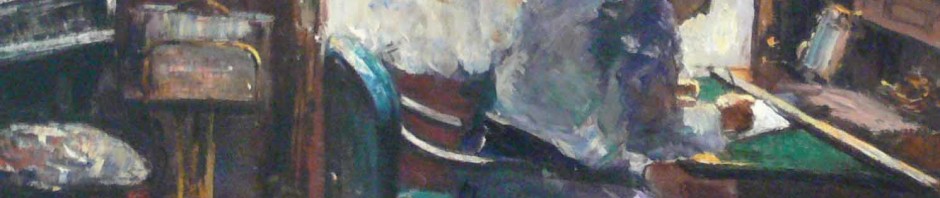
    painting of woman at her writing desk

    Recently, I finished the latest revisions to my young adult manuscript after spending all fall putting it off even though I’d reduced my time at work to 25% specifically to have more hours for writing. The energy and motivation came to me only after I was hired for a very demanding, new job, starting January 1.

    I guess I’d been discouraged. The hardest part about writing this story, and the reason I’m doing it, is that it’s true, not word-for-word true, but all of the events actually happened. It’s the story of a fictional, 14-year-old Armenian boy, named Arakel, caught up in the genocide 100 years ago in the Ottoman Empire. It’s not about any member of my family, but I feel I owe it to all of the people who suffered or died in the genocide to convey what they went through.

    Arakel’s nearly dying voice in the desert came to me clearly years ago. At public readings in San Francisco and Somerville, after receiving awards for the manuscript, I’ve read from a chapter in the middle of the book where a camel caravan master picks Arakel up in the desert after he’s spent the night in a cave filled with bones. I’ve hardly revised that section since I first wrote it.

    But how did Arakel feel before that, before he knew nearly all of his family, nearly all of the people in his town, nearly all of the Armenians in the Ottoman Empire were going to die? And where should I start the story so teenagers with no knowledge of the genocide or the Ottoman Empire could relate? I’ve tried at least five different points in time, but none worked well.

    If you write a book about the Holocaust, everyone knows what happened to Anne Frank. You don’t have to explain who Hitler was. But the Armenian genocide is different. And it’s not just teenagers who might not know. I received a query response from a literary agent on April 24, 2015 — the same day as the 100-year commemoration of the Armenian genocide, after the Pope had recognized the genocide, and the Armenian Church had canonized 1.5 million Armenian martyrs — and this agent suggested I rework the manuscript as a middle grade adventure. For the first and I hope the only time, I lost it with an agent and fired back an angry email. A lot of people died. This wasn’t an adventure.

    But there I was, still revising Chapter One, still trying to create an instant connection with readers. My wonderful Critique Group stood by me with helpful suggestions, but by then they knew Arakel nearly as well as I did. I even hired Miss Snark’s First Victim to comment on the first 30 pages. She was brutal: “I’m confused and not in a good way.” And that was just her opening salvo. I won’t repeat the rest, but she ended her critique by saying, “I know you can do this.”

    So I had to try. When I reduced my time to 25% at the beginning of September, and my son went off to college, which I instantly wrote about and the Washington Post picked it up for its “On Parenting” Blog (“My college freshman and the very delayed first call home”), I did not get right to work on my manuscript. Instead, I volunteered for added duties at a non-profit, worked out at my health club every day, even cleaned the house — anything other than write.

    Then in December, when I got hired for a full-time job to start January 1, that’s what did it. It was now or never. I had to finish. On an unusually warm December morning, I sat on a bench outside my favorite coffee shop in Cambridge, and the first line came to me. It was so obvious I couldn’t believe I hadn’t thought of it before. The rest fell into place.

    The other day, I re-queried an agent, whom I’d thought would be perfect, and right away, she requested the full manuscript. It’s in her queue. Three months to wait. I can’t get my hopes up. I’ve been here before. I can’t get too excited, but of course I am. I’m hoping this time will really be it. I’ll let you know.

  • Ballet or Boxing: How’s a Girl to Decide?

    Ballet or Boxing: How’s a Girl to Decide?

    ballerina in boxing gloves

    As a kid, I was never a ballerina in a fluffy tutu. I hated dresses. I played with stuffed animals, not dolls. I grew up being called a Tom-Boy. But recently, I stumbled into a Ballet Barre Workout class at my health club, when I was late for the class I meant to attend, and now ballet barre is my favorite thing.

    Our teacher is tough. “Pull in those abs, Sarah. Harder. Tuck in your bottom, Sarah. Turn your feet out.” And I love it. When she tells us “to look straight toward the horizon and plié with dignity,” we do and beam. Our inner five-year-olds are very happy. We don’t care the mirrors lining the walls are trying to remind us of a different reality. We check our positions, tuck in our butts, and “gaze at the people in the loge box seats.”

    Our teacher treats us like ballerinas. Maybe it’s her piano music tape, or her careful corrections: “Lift your arms over your head, slightly in front of you, so you could just see your fingers if you looked up” (which you are not allowed to do). Maybe it’s the delight she expresses when for a brief moment we are all balancing on our toes, arms curved overhead, without wobbling or holding onto the barre.

    Whatever it is, the class casts a spell. If I were actually five, I’d probably hate it. In fact, at the only ballet class my mother ever took me to when I was about five, the teacher suggested to my mother that I not come back, “She’s definitely athletic but not a dancer.”

    I was never the girly type. We have a photograph of a family gathering with my great grandmother in the center and my grandparents, parents, aunts, uncles, siblings and cousins. I’m about four years old, wearing a pink party dress and a long-sleeve flannel shirt underneath. Years later, I asked my mother about it. “You refused to put on your dress. That was the compromise.”

    I was upset in third grade when my father made my older brother and his friend Brad stop playing tackle football with me. Flag football only. When I was in sixth grade, my father lectured my brother about not throwing the baseball too hard at me after dinner when we played catch in our yard. So we waited until Pop went back indoors and resumed.

    I played tons of sports in high school and played tennis competitively in the 18-and- Unders. People finally stopped calling me a Tom-Boy, but that hardly helped. When I tottered downstairs to our front hall one evening in the 11th grade, wearing a red chiffon dress and black heels for ballroom dancing/etiquette class, which I attended with my older brother, he yelled, “Look, it’s Minnie Mouse!”

    I always thought there were boys and there were girls and then there was me, somewhere in the middle. Is that because everyone called me a Tom-Boy? Or something deeper? I was always attracted to guys, so that was that. What was there to think about? I just felt different.

    When I was living in Montana in my twenties, I stayed once with two friends my age at their ranch. They were married and their uncle was visiting. I was wearing jeans and a t-shirt, and had my hair pulled up under a cap. Their uncle, who had recently retired from a lifetime career as a prison guard and wore the steel-toed shoes to prove it, looked at me, looked away and looked back again. He turned to them, “Is that your boy?” I’m not exactly shapely, but still. Did that make me a twelve-year-old boy?

    What was this all about? A question of gender identity? Or just a girl who loved sports as a kid and hated dresses?

    Does it matter? I don’t know. All I know is for the first time ever I want to be a ballerina. Oh, and I also want to learn how to box. Something else I’ve never done.