When the college president stood before my husband and me, and hundreds of other parents assembled in the chapel after dropping our freshmen off, he told us we shouldn’t text our sons and daughters but use e-mail instead. And that we should wait before responding if they texted us. I understood.
“What the world needs is problem-solvers,” he had said to drive his point home.
That makes sense, I thought as I sat there. My husband has been on a campaign to foster independence since our son was 6 and we first started arguing over whether he was too young to ride the public bus alone. My husband swears he was taking public transportation in New York City himself by that age. And I went nearly 3,000 miles away for college in California at 17, calling home collect from a pay phone in the hall. And here we were, feeling grief-stricken that our only child was leaving us for college, hoping he wouldn’t hear it in our voices.
The week before I started freshman year of college in California (some time ago), I spent the night with my two girl cousins, sleeping in twin beds with a cot between us. The older of my two cousins, who was in high school, asked me what I thought about the meaning of life. She still poses big questions, probably picking up the trait from her deep-thinking father, my favorite uncle. I told her I thought life was like a clock ticking. The large round dial of her alarm clock glowed on the bedside table between us. “You just have to wait for it to wind down.”
“You don’t really mean that, do you?” she asked.
“I do.” Depressing, I know.
I did attend college that fall and, after dropping out twice, did graduate.
Then I left the United States, hoping never to return. I was furious about the war in Vietnam and about our country preaching democracy at home and toppling governments abroad that didn’t serve our economic interests.
I worked for an anthropologist in Chiapas, Mexico, and made my way south through Central America with friends and eventually southern Colombia, by this time traveling alone. I fell in with some people from the United States, who were making a circuit of Latin America and who urged me to renew my Colombian visa in Ecuador, which wasn’t far away, come back to Colombia and travel some more. Several of my new friends had just been in Chile, where the United States was overthrowing the democratically-elected government of Salvador Allende because he was nationalizing key industries.
From that remote spot, I wondered what to do. More than ever, I hated the United States, but I realized it was my country. If I was upset, I should go back and do something about it.
And here’s the part where the Pope and Bernie come in. They’re telling us the same thing — we have a moral responsibility to each other and to this planet.
Bernie, a Jew from Brooklyn, who, in his own words, is not particularly religious, features on his presidential campaign website a direct quote from the Pope: “we also have to say ‘thou shalt not’ to an economy of exclusion and inequality. Such an economy kills. – Pope Francis.”
During his closing remarks at Democratic Debate #1, Bernie asked all of us to take action: “Nobody up here can address the major crises facing our country unless millions of people begin to stand up to the billionaire class that has so much power over our economy and our political life.”
Pope Francis has given us the same message. His environmental encyclical in June called on “every person who lives on this planet.” In his public appearance to the crowds outside the U. S. Capitol in September, he reached out to people whether they believe in God or not: “I ask you all please to pray for me and if there are among you any who do not believe or who cannot pray, I ask you please to send good wishes my way.”
Why would the most powerful Christian leader in the world need us, whether we believe or not? He says he has many weaknesses and problems. “I am a sinner too,” he says.
He’s also saying everyone matters. Not just the great, the powerful and the righteous. Our voices make a difference too.
Bernie and the Pope are pleading with us to take action, to get involved and to make the world a more just, equitable and sustainable place.
And I’ve realized that fighting for what I believe in has given me a reason for being here.
It doesn’t really matter that Serena lost in the semi-finals of the U.S. Open and fell short of accomplishing the nearly impossible feat of winning all four Grand Slam tournaments in the same year. She’s a champion, and so is her sister Venus, definitely for their awesomeness on the tennis court, and most especially for showing us what dedication and hard work can accomplish.
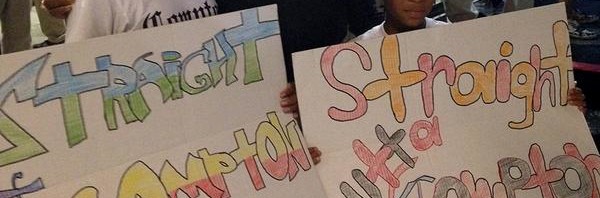
Nothing was handed to these two sisters from Compton, who’ve dominated women’s tennis for nearly 20 years. In a sport usually associated in the U.S. with exclusive country clubs, Venus and Serena trained with their dad on cracked, public courts in a predominantly African-American city in southern California, practicing at 6 a.m. before school and again after school until dinner, gun fire popping in the background, their father fighting off gangs, and eventually gang members surrounding their court for protection. Not exactly the All England Club.
A few nights ago on center court at Arthur Ashe Stadium, named for the first African-American man to win a Grand Slam (the top four tennis tournaments in the world, played in Australia, France, England and the U.S.), over 23,000 people were transfixed by the sisters slugging it out against each other. Family tennis anyone?
When Venus and Serena first burst onto the professional tennis scene, lots of people had unkind words. They didn’t fit in, they were tall and strong, they hit hard, they had big serves, and they were black. People said they were too self-confident, they had power and nothing else, their father made a huge mistake training them himself for so long, and on and on. But Venus and Serena persevered, training hard, staying focused, and winning, and in the process, won over all of our hearts too.
They have shown us what we like to think is still true about this country, even as the divide between rich and poor widens and a class society takes hold and so much racial discrimination persists that we need a movement called Black Lives Matter. These two women have demonstrated that if you work really hard, if you keep fighting for your dream, if you stay determined and confident despite criticism and racial slurs, and if you’re courageous enough, you will indeed go far.
As Serena said to a group of girls in Nigeria, “It doesn’t matter what your background is and where you come from, if you have dreams and goals, that’s all that matters.” (reported by Benjamin F. Chavis, Atlanta Voice, June 12, 2015).
And that’s what their greatest legacy is — the inspiration they give to people all over the world — to dream big, then work incredibly hard to get there. Thank you Venus and Serena!
Do you look up to the Williams sisters too? Who’s inspiring to you?
I was lucky to meet up with Doug Holder of Ibbetson Street Press recently, who wrote about my good fortune in being selected as a Somerville Arts Council Literature Artist Fellow this year and my efforts toward the 100-year commemoration of the Armenian Genocide. Here’s his article from The Somerville Times. Thanks Doug!
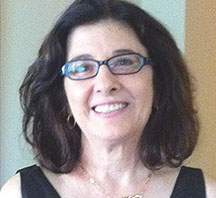
Somerville’s Sarah Ignatius met me on a warm spring morning, at my unofficial office in the backroom of the Bloc 11 Café in Union Square. Ignatius is the Executive Director of the Political Asylum/Immigration Representation Project in Boston, and also a Somerville Arts Council Grant Fellow, who presented a talk and visual presentation at the Somerville Public Library entitled “Remembering 1915: The 100-Year Commemoration of the Armenian Genocide.” She is also the author of a young adult novel (not yet published) The Devil’s Kaleidoscope. The novel concerns a 14-year-old Armenian boy caught up in the genocide.
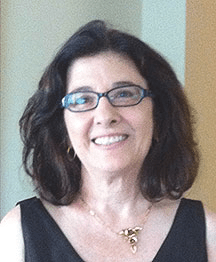
Sarah Ignatius
Ignatius has lived in a carriage house in the Union Square section of Somerville since 1992. She was born in Boston, but has lived in many other places. She told me, “I love Somerville, the community events, the special dynamic that the city offers. Some of the homes here are so beautiful, and I love the public spaces.”
Ignatius, in her role of the Executive Director of the Immigration Representation Project, helps immigrants from Africa, the Middle East, and elsewhere to achieve asylum in this country. She claims she has a 90% success rate. Prominent law firms like Ropes & Gray and others send their young lawyers to train at the project, and in turn they provide valuable services for asylum-seekers.
The Armenian Genocide, Ignatius’ focus as of late, occurred in 1915 when 1.5 million Armenians were slaughtered by the Turks. Ignatius told me that she was delighted with the Pope’s decision to call the Armenian Holocaust a “genocide,” a word that has been quite controversial as of late. Ignatius’ presentation at the Somerville Public Library consisted of a PowerPoint presentation, along with a slideshow, which is meant for the Armenian and non-Armenian.
Ignatius’ young adult novel, The Devil’s Kaleidoscope, has as a 14-year-old boy as the protagonist, who is caught up in the genocide. According to Ignatius, “The book does not focus on violence, and is geared to promote peace in a world that is often filled with blood lust.” Ignatius said she had a great deal of help with her book from teachers at Grub Street in Boston. And indeed, Ignatius has another novel in the works that concerns two girls, 18 years old, Berkeley, the 70s—well you get the picture.
Ignatius wished me a quick goodbye, because like most of us in the Paris of New England, we always have a lot to do, people to meet, and many miles to go before we sleep.
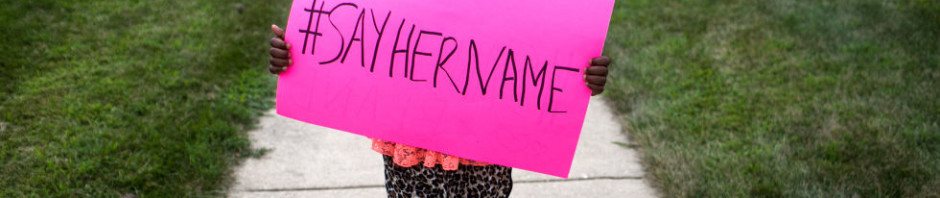
“I know what my purpose is,” Sandra Bland said, as recounted by her mother. “My purpose is to go back to Texas and stop all social injustice in the South.”
I’m sure she didn’t think she’d have to die trying.
But she did show the world how immense that calling is. It’s a horrible irony that she was excited about working at her alma mater, Prairie View A&M University, as an outreach coordinator. Now, everyone does know all about the area – where officers waste tax-payers’ money arresting people for imaginary infractions, divert public safety personnel as back-up in situations they created, require tow trucks on the scene of illegal lane changes, and so on, rather than actually fight crime.
Her turn signal infraction wasn’t even that. From the video, you see the road going from one lane to two as Sandra Bland drove through an intersection. To stay in the lane closest to the right side of the road, out of the passing lane, a driver has to move to the right, into the newly created lane, which is exactly what she did. It’s a road design issue, which causes a cautious driver to change lanes in order to stay in the slow lane.
Trooper Brian Encinia stumbled around verbally on the video about what the charge was. Just why was he arresting her? He clearly had no idea since he had no injuries and Sandra Bland had not committed a crime. Failing to use a blinker and smoking in your own car are not criminal offenses.
She repeatedly asked him why she was being arrested, and the trooper never answered. He had to make up a reason after aiming his taser at her, handcuffing her and slamming her head against the ground.
As for the race question, white people are rarely pulled over for changing lanes without signaling. However, I was and I’m white. It was one night in Seattle several years ago on a road that skirts the edge of a predominantly African-American neighborhood. I changed lanes to pass an annoyingly slow car. Of course I didn’t signal and a police car pulled me over. As the white officer came up beside the driver’s side window and peered in, an unmistakable look of shock came over his face. Apparently, he meant to get me for driving while black. He let me drive off, after advising me to be careful and reminding me not to change lanes so abruptly in the future. No ticket, no taser, no handcuffs, no smashed head, no jail cell, no death.
Sandra Bland was brave enough to narrate the injustices as they happened to her in that video, which is so hard to watch. It is our task to continue her fight for justice. Her voice is the voice of our conscience, urging us to speak out against injustice everywhere.